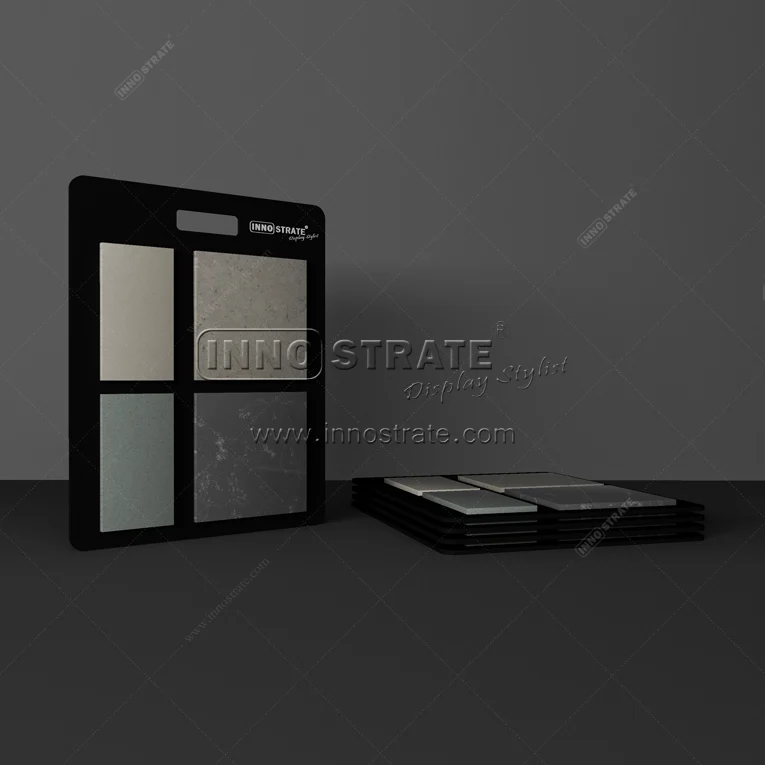
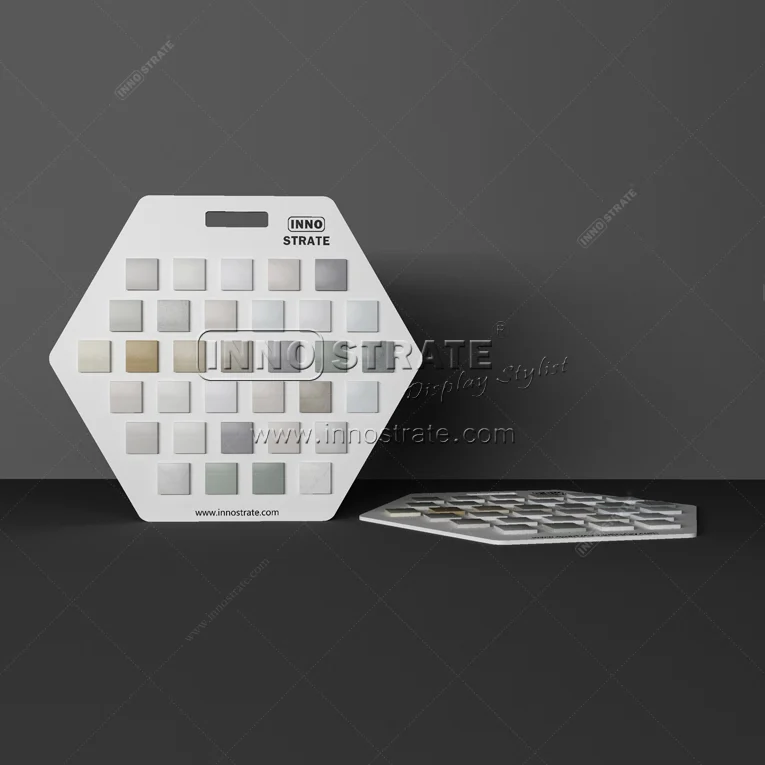
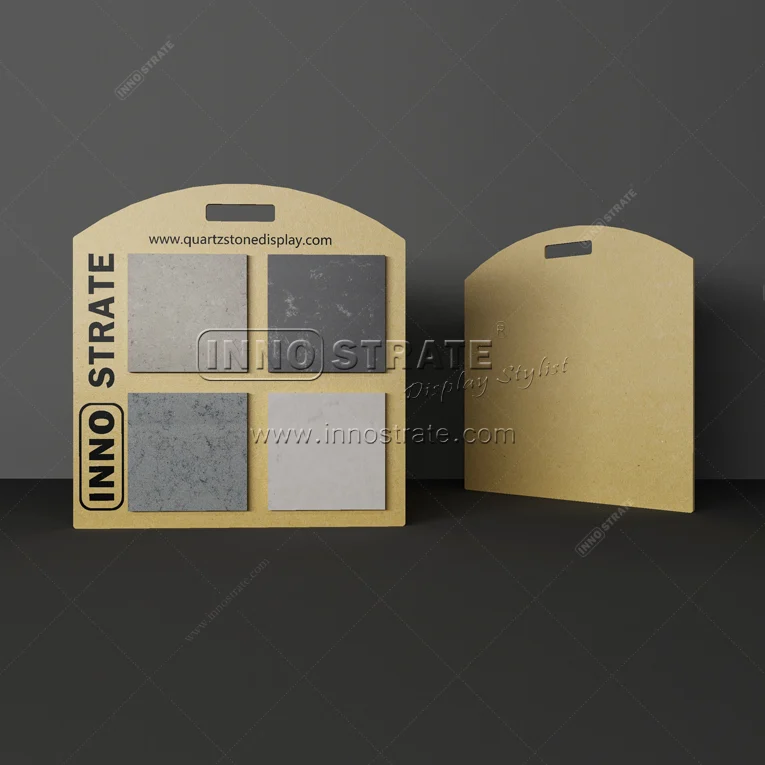
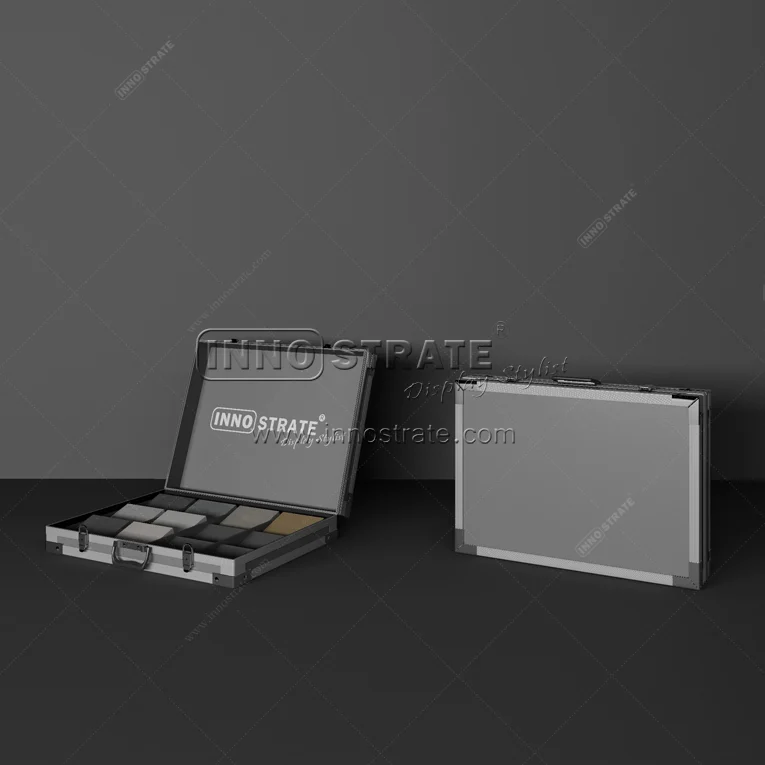
Use full slabs to show pattern scale and countertop samples to support close comparison. Connect them with consistent collection names and sample codes. A coordinated showroom helps visitors move from exploring the range to discussing a shortlist, while books or boxes support the next conversation away from the slab display.
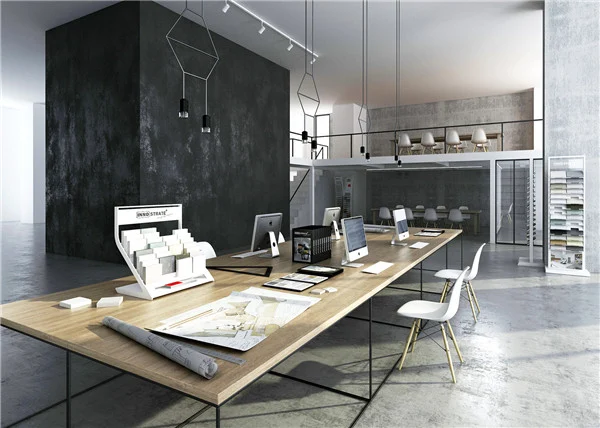
Give each presentation tool a clear role
A large slab shows the relationship between a surface's background and its wider pattern. A smaller sample lets a buyer examine a selected area beside other finishes. Neither replaces the other: a chip cannot represent every part of a patterned slab, and a large display is not always the easiest place to compare a shortlist.
Assign each tool a purpose before choosing the fixtures. This helps avoid a showroom filled with repeated samples that add little to the consultation.
- Full-slab display: introduce scale and overall pattern.
- Tower or floor display: browse a broader color collection.
- Countertop stand: compare a focused selection near a desk.
- Sample book or box: organize the range for meetings or carrying.
Connect the collection through accurate labels
Use the same approved product name and code on the full slab, sample stand, book and box. Labels should make it clear which collection a sample belongs to and where the visitor can find the corresponding larger presentation.
Do not imply that a small piece shows the exact pattern of every slab. Where appearance varies, use the material supplier's product information and make the selection process clear. Keep material claims separate from the display specification: the fixture presents the surface but does not certify its performance.
Plan a practical consultation route
Place the collection overview where visitors can understand the range, then provide a place to discuss selected samples. The layout should allow staff to move between the relevant tools without disrupting people browsing other fixtures.
Review the operating space around moving displays and the handling requirements for removable samples. Include storage for returnable pieces and retired collections. The desk display should be sized for the actual consultation surface, with enough room left for drawings, finishes and conversation.
Specify the family together
When requesting coordinated fixtures, provide a collection map: which materials appear in full slabs, which need countertop samples and which belong in portable kits. Add the sample schedule, display quantities, brand artwork and showroom plan.
Review the family as a whole, while confirming the technical requirements of each unit individually. A shared finish or logo treatment can connect the tools, but every fixture still needs its own sample fit and installation review. When collections change, update the labels and sample records together so the showroom remains consistent.
This guide supports the purchasing brief. A model-specific drawing and any required engineering or site review determine the final specification.