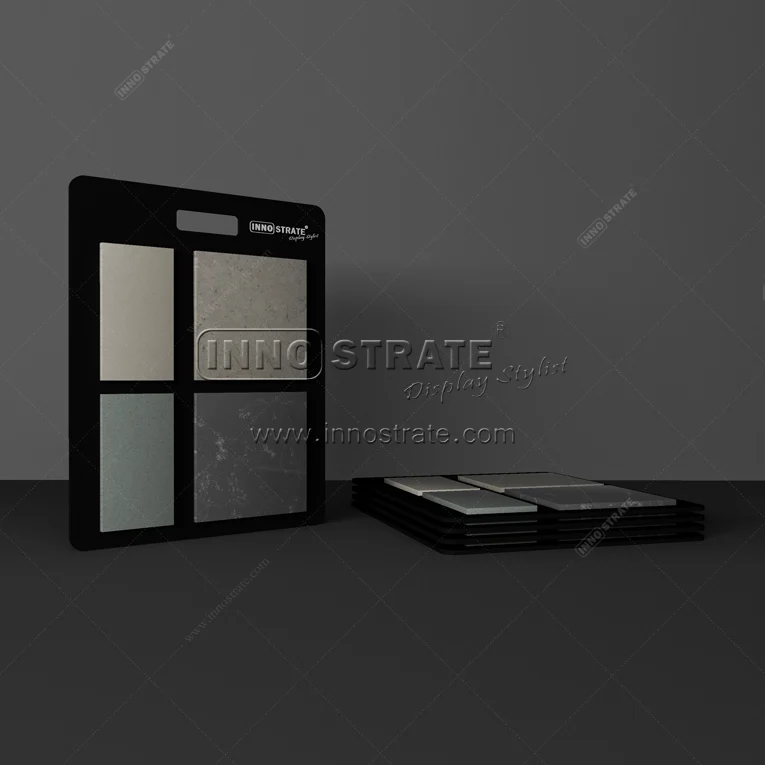
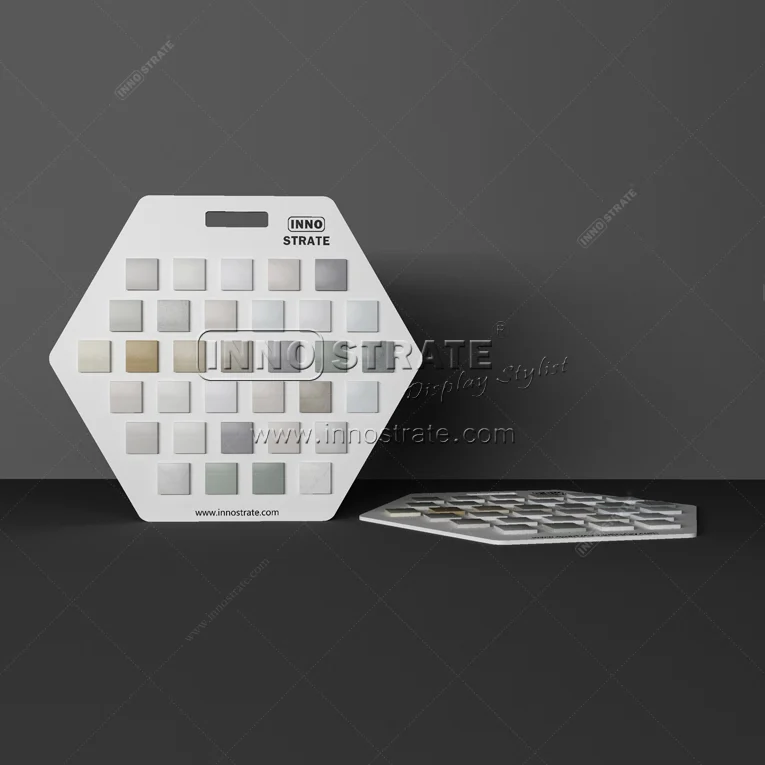
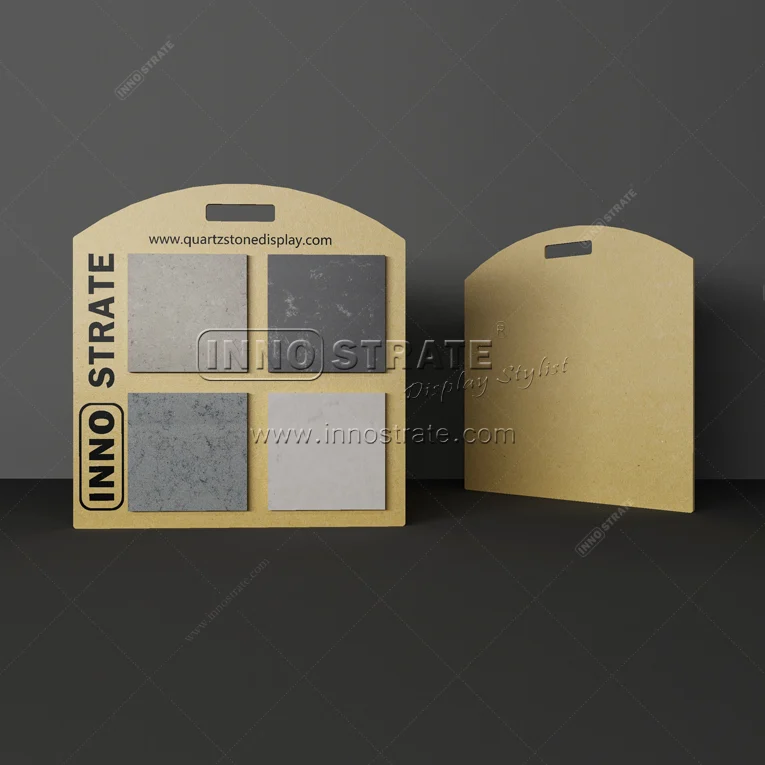
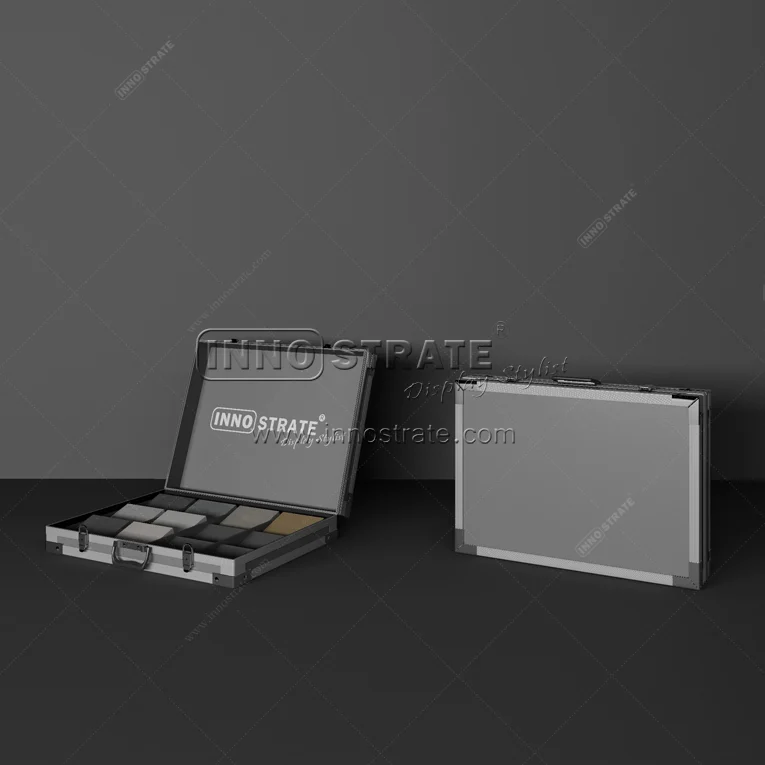
A useful custom display RFQ includes the sample specification, display purpose, quantities, available space, branding, delivery destination and target schedule. Add photographs or drawings wherever possible. Ask suppliers to state assumptions and separate product, tooling, sample preparation, packaging and shipping costs so proposals can be compared on the same basis.
Describe what the display needs to do
Begin with the buyer's task. Explain whether visitors will browse a complete range, compare a shortlist, remove samples or view a full slab. Identify the setting: a distributor showroom, retail store, design studio, sales visit or trade exhibition.
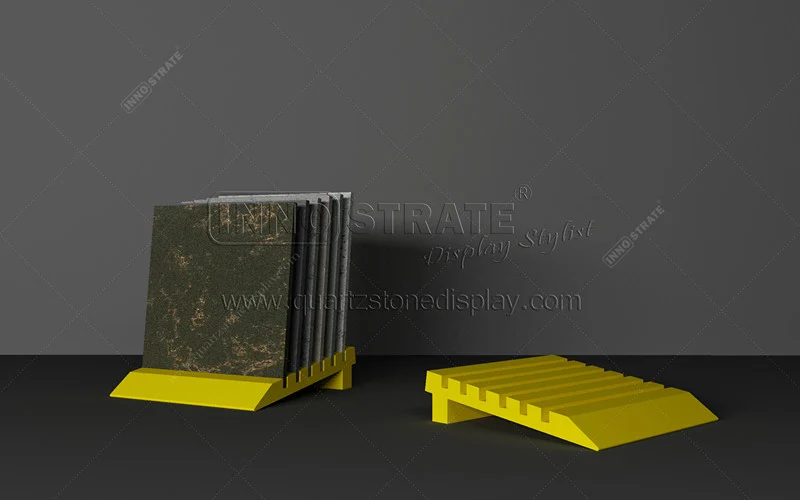
A reference photograph helps communicate a preferred format. Add notes about what should change rather than treating the image as a production drawing. If the project includes several display types, explain how they should work together and which elements need consistent branding.
Provide the physical information
List the sample dimensions, thickness, weight and quantity for each fixture. Include the smallest and largest pieces if there are several formats. For racks with movement, provide the available operating space as well as the closed footprint.
For full-slab systems, include actual slab specifications and installation information for technical review. For books and boxes, include the required sample sequence, chip retention method and expected handling. Explain who supplies samples and whether preparation or loading is part of the requested service.
- Sample schedule and drawings or photographs.
- Display quantity, location and space constraints.
- Material and finish preferences, with reference samples if available.
- Delivery destination and site access restrictions.
Define the brand and commercial scope
Supply an approved logo, color references and any rules for typography or graphic placement. Identify the languages required on labels. Note whether artwork development is needed or whether print-ready files will be supplied.
Give the supplier a target delivery date and explain whether it is tied to a store opening or exhibition. Request a proposed approval and production schedule rather than assuming a standard lead time. Confirm the trade term and destination used for the freight quotation.
Agree the approval points before ordering
Ask what drawings, material references or prototypes will be submitted for approval. A review should cover the relevant sample fit, branding, finish, movement and assembly details. Record approved changes so the production version is clear.
Finally, confirm packaging, installation information, replacement parts and the process for reporting delivery issues. A complete RFQ reduces avoidable assumptions; it does not need to be a finished engineering package. If information is still missing, mark it as open and assign responsibility for confirming it.
This guide supports the purchasing brief. A model-specific drawing and any required engineering or site review determine the final specification.