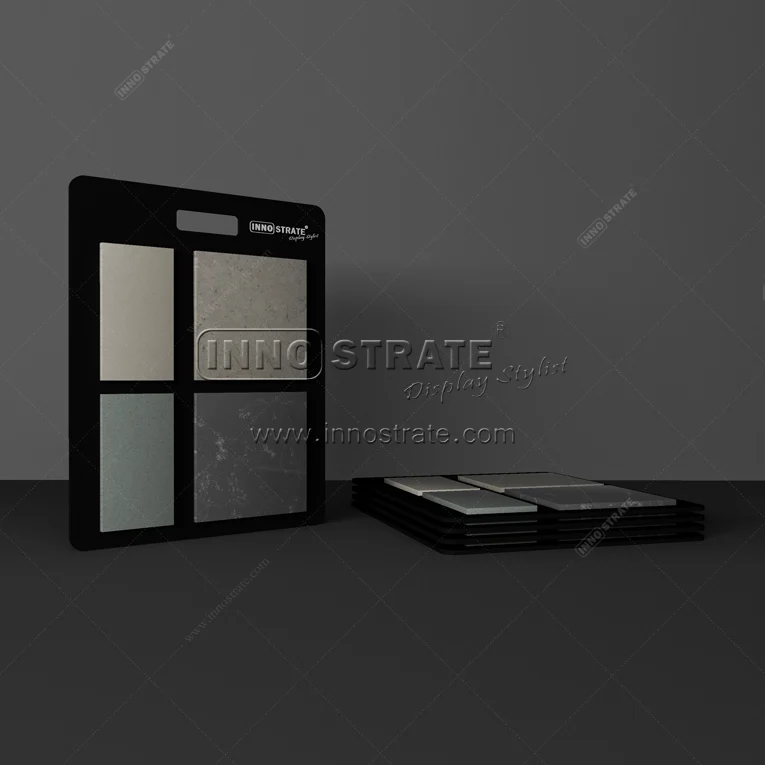
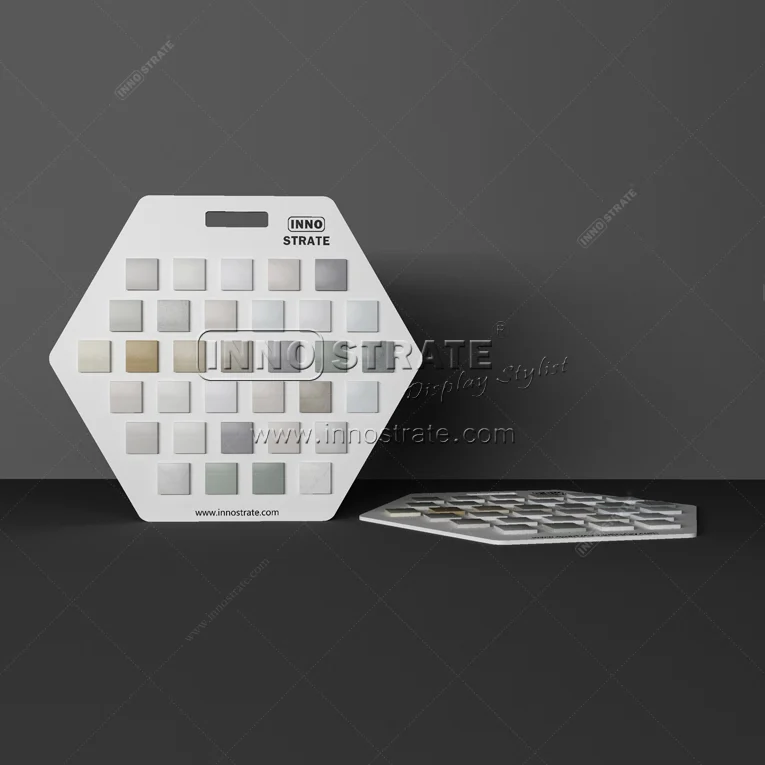
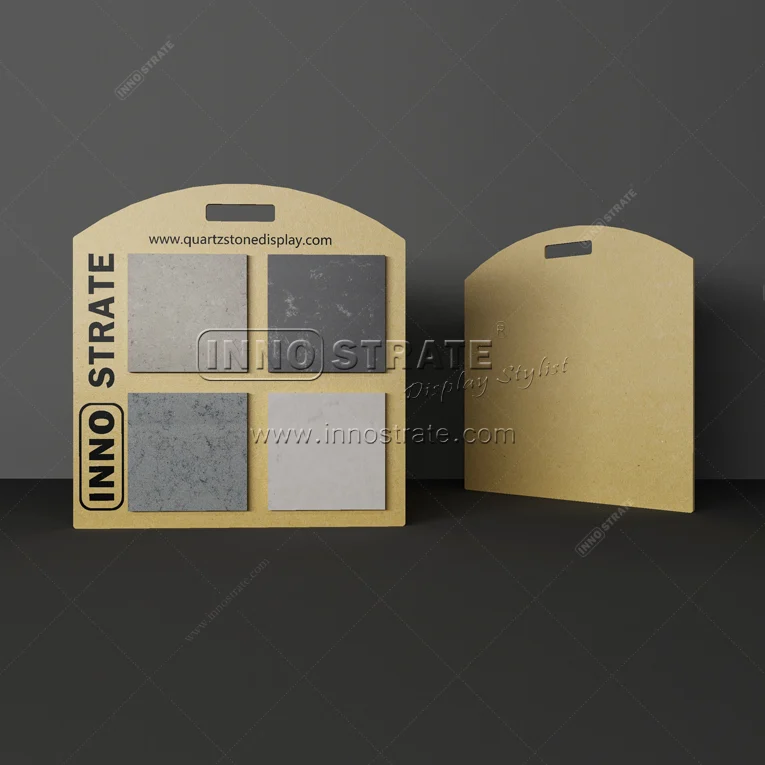
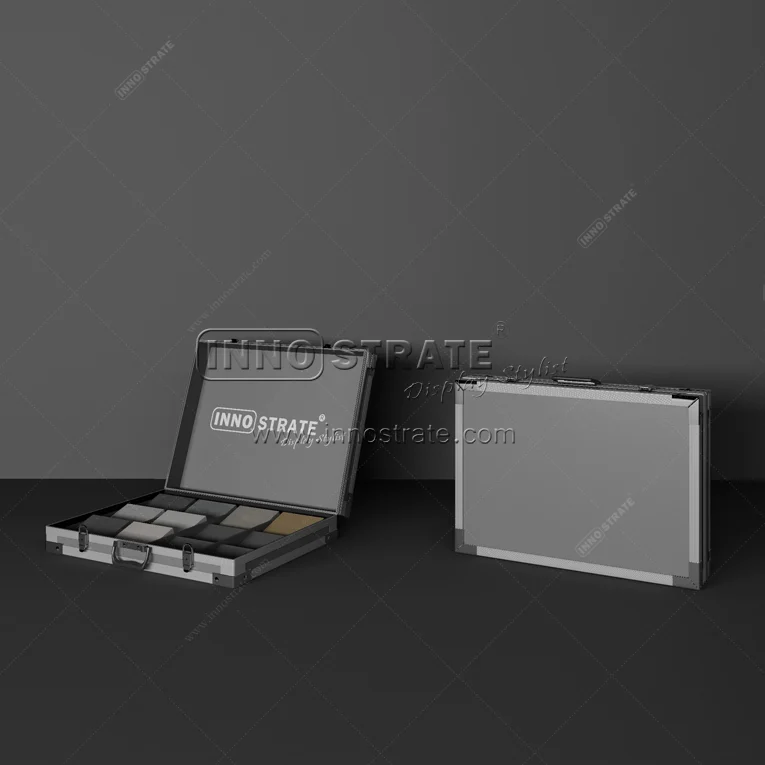
Choose a quartz sample book when the collection needs an ordered, page-by-page presentation. Choose a sample box when users need to remove and compare individual pieces. The better format depends on sample dimensions, total weight, how the kit will travel and how often the collection changes.
Choose the browsing experience first
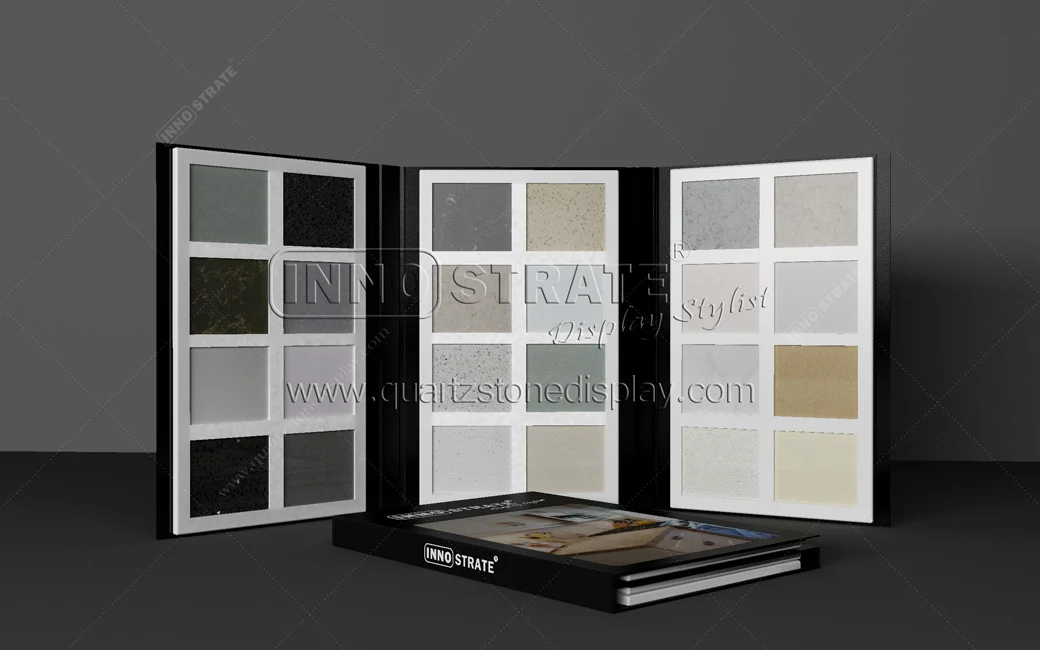
A sample book keeps a collection in a defined sequence. It can combine material chips with names, codes and supporting graphics. This suits a sales conversation that follows a range, a color family or a coordinated specification story.
A sample box allows a different interaction. Individual pieces can be lifted out and placed beside cabinetry, flooring or other finishes. The box insert and retention method should match the way samples will be handled, including whether customers may borrow or return them.
Compare the complete kit, not just its outer size
Start with the individual sample dimensions and weight, then calculate the complete collection. Covers, inserts, graphics and any carrying hardware add to the finished kit. A compact outer package can still become uncomfortable to carry when filled with stone samples.
State how the kit will be used: on a showroom table, by a visiting representative or as a selection box for a design studio. Ask the manufacturer to propose a construction for that use and review a representative loaded prototype before confirming production.
- Sample count, length, width, thickness and weight.
- Fixed or removable samples and the proposed retention detail.
- Desktop use, hand carrying or shipment to customers.
- Artwork, printed labels and replacement sample requirements.
Make collection updates part of the design
A collection may gain new colors or retire existing ones. Decide how that change will be handled before the first production run. Replaceable labels, removable samples or a modular insert may be useful, but the details depend on the chosen construction.
Use one approved naming system across the book or box, showroom fixtures and digital catalogue. A sample code should lead the buyer to the right product rather than a similar-looking name. Review small printed text at its actual production size, including text on dark or textured surfaces.
Send a brief that supports a fair comparison
Request options against the same sample schedule and quantity. Separate the sample kit construction from sample cutting, loading, printing, packaging and freight so the scope is clear. Confirm who supplies the material chips and who checks the final arrangement.
Some collections benefit from both formats: an ordered book for the complete range and a removable box for a selected palette. The decision should follow the sales task and handling needs, rather than a belief that one format is always more premium.
This guide supports the purchasing brief. A model-specific drawing and any required engineering or site review determine the final specification.